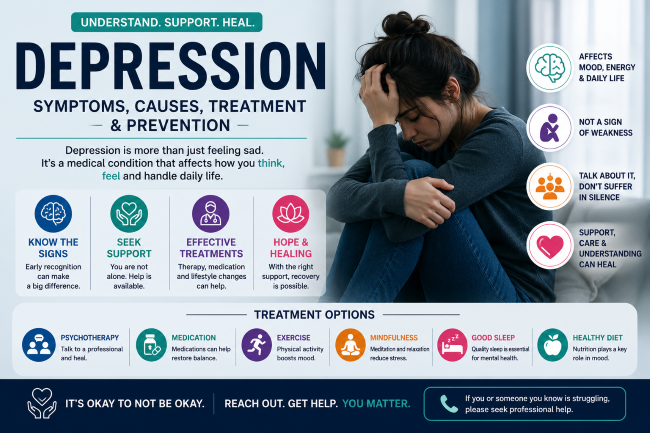
Depression is a common mental health condition affecting millions worldwide. This article covers its symptoms, causes, treatment, and ways to prevent it.
Overview
Depression is a mood disorder characterized by persistent feelings of sadness, loss of interest, and a range of emotional and physical problems. It can affect how a person feels, thinks, and handles daily activities. Recognizing depression early and seeking professional help is important for managing symptoms and improving quality of life.
Symptoms of depression vary but commonly include persistent sadness, loss of interest in activities, fatigue, changes in appetite or sleep, difficulty concentrating, feelings of worthlessness, and sometimes thoughts of self-harm. Causes of depression are complex and may involve genetic, biological, environmental, and psychological factors.
Diagnosis is typically made by a qualified healthcare professional through a detailed clinical evaluation, including discussing symptoms and medical history. Treatment options often include psychotherapy, medications such as antidepressants, lifestyle changes, and support from family and friends.
Prevention strategies focus on maintaining a healthy lifestyle, managing stress, seeking support during difficult times, and early intervention when symptoms appear. Complications of untreated depression can include worsening mental health, physical health problems, and impaired social and occupational functioning.
A balanced diet rich in nutrients, regular physical activity, and avoiding alcohol and drugs can support mental health. If you or someone you know is experiencing symptoms of depression, it is important to consult a qualified healthcare professional for proper diagnosis and treatment guidance.
Symptoms
Persistent sadness, loss of interest or pleasure in activities, fatigue, changes in appetite or weight, sleep disturbances, difficulty concentrating, feelings of guilt or worthlessness, and thoughts of death or suicide.
Causes
Depression results from a combination of genetic predisposition, brain chemistry imbalances, traumatic life events, chronic illness, and prolonged stress.
Diagnosis
Diagnosis involves a thorough evaluation by a healthcare professional, including clinical interviews, questionnaires, and ruling out other medical conditions.
Treatment
Treatment options include psychotherapy (such as cognitive-behavioral therapy), antidepressant medications, lifestyle modifications, and support networks. Treatment plans should be personalized and supervised by healthcare providers.
Prevention
Preventive measures include regular physical activity, balanced nutrition, stress management techniques, maintaining social connections, and seeking help early when symptoms appear.
Complications
Untreated depression can lead to worsening mental health, increased risk of substance abuse, impaired daily functioning, and in severe cases, suicidal behavior.
Diet Plan
A diet rich in fruits, vegetables, whole grains, lean proteins, and omega-3 fatty acids may support brain health. Limiting processed foods, caffeine, and alcohol can help manage symptoms.
Frequently Asked Questions
What are common symptoms of depression?
Common symptoms include persistent sadness, loss of interest in activities, changes in appetite or sleep, fatigue, difficulty concentrating, and feelings of worthlessness.
What causes depression?
Depression can be caused by a combination of genetic, biological, environmental, and psychological factors.
How is depression diagnosed?
A qualified healthcare professional diagnoses depression through clinical evaluation, discussing symptoms, and medical history.
What treatments are available for depression?
Treatments include psychotherapy, antidepressant medications, lifestyle changes, and support from family and friends.
Can depression be prevented?
While not always preventable, maintaining a healthy lifestyle, managing stress, and seeking early support can reduce the risk of depression.
Medical disclaimer
This content is for educational use only. Speak with a qualified healthcare professional for diagnosis, treatment, or medication decisions.