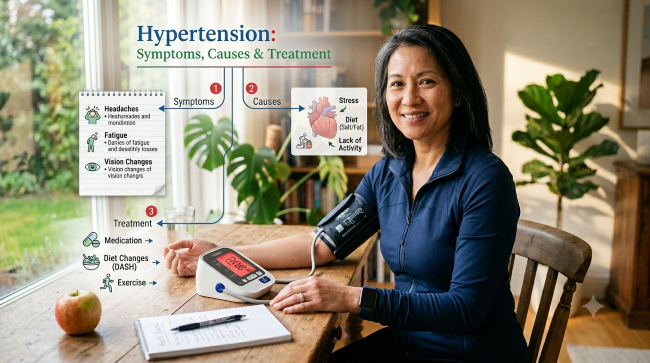
Hypertension, or high blood pressure, affects millions worldwide. Understanding its symptoms, causes, and treatments is essential for managing your health effectively.
Overview
Hypertension, commonly known as high blood pressure, is a chronic medical condition where the force of the blood against artery walls is consistently too high. Often called the "silent killer," hypertension may not show obvious symptoms but can lead to serious health issues if left unmanaged. Recognizing the symptoms, understanding the causes, and knowing the treatment options can help you take control of your health.
Symptoms of hypertension are often subtle or absent, which is why regular blood pressure checks are crucial. Some individuals may experience headaches, dizziness, shortness of breath, or nosebleeds, but these symptoms usually occur when blood pressure has reached a dangerously high level.
Common causes of hypertension include genetic factors, unhealthy diet, lack of physical activity, obesity, excessive alcohol consumption, stress, and certain chronic conditions such as kidney disease. Age and ethnicity can also influence the risk.
Diagnosis involves measuring blood pressure using a cuff and monitor, often on multiple occasions to confirm persistent high readings. Doctors may also order blood tests, urine tests, or imaging studies to identify underlying causes or related complications.
Treatment typically includes lifestyle changes such as adopting a healthy diet, regular exercise, limiting salt intake, quitting smoking, and reducing alcohol consumption. In some cases, doctors may prescribe medications to help control blood pressure.
Preventing hypertension focuses on maintaining a healthy lifestyle, managing stress, and routine health screenings. Early detection and management are key to reducing the risk of complications.
Potential complications of unmanaged hypertension include heart attack, stroke, kidney damage, and vision loss. Therefore, it is vital to consult a healthcare professional for proper diagnosis and personalized treatment plans.
A heart-healthy diet rich in fruits, vegetables, whole grains, lean proteins, and low in saturated fat and sodium supports blood pressure control. Limiting processed foods and sugary beverages is also beneficial.
Always consult a qualified healthcare provider for guidance tailored to your individual health needs.
Symptoms
Hypertension often has no symptoms, but may sometimes cause headaches, dizziness, shortness of breath, or nosebleeds when blood pressure is very high.
Causes
Causes include genetics, unhealthy diet, lack of physical activity, obesity, excessive alcohol, stress, chronic kidney disease, age, and ethnicity.
Diagnosis
Diagnosis is made by measuring blood pressure on multiple visits. Additional tests like blood and urine tests may be done to identify causes or complications.
Treatment
Treatment involves lifestyle changes such as healthy eating, regular exercise, reducing salt intake, quitting smoking, limiting alcohol, and medications as prescribed.
Prevention
Prevent hypertension by maintaining a balanced diet, staying active, managing stress, avoiding tobacco and excessive alcohol, and regular health screenings.
Complications
Complications include heart attack, stroke, kidney damage, vision loss, and other cardiovascular problems if hypertension is left uncontrolled.
Diet Plan
A diet rich in fruits, vegetables, whole grains, lean proteins, and low in sodium, saturated fats, and processed foods supports blood pressure control.
Frequently Asked Questions
What are the common symptoms of hypertension?
Hypertension often has no noticeable symptoms. When symptoms appear, they may include headaches, dizziness, shortness of breath, or nosebleeds, especially at very high blood pressure levels.
How is hypertension diagnosed?
Hypertension is diagnosed by measuring blood pressure using a cuff and monitor on multiple occasions. Additional tests may be done to check for underlying causes or complications.
Can hypertension be prevented?
Yes. Preventing hypertension involves maintaining a healthy diet, exercising regularly, managing stress, avoiding tobacco and excessive alcohol, and having regular health check-ups.
What treatments are available for hypertension?
Treatment includes lifestyle changes such as diet and exercise, and if needed, medications prescribed by a healthcare provider to help control blood pressure.
When should I see a doctor about hypertension?
You should consult a healthcare professional if you have consistently high blood pressure readings or experience symptoms like severe headaches or chest pain.
Medical disclaimer
This content is for educational use only. Speak with a qualified healthcare professional for diagnosis, treatment, or medication decisions.