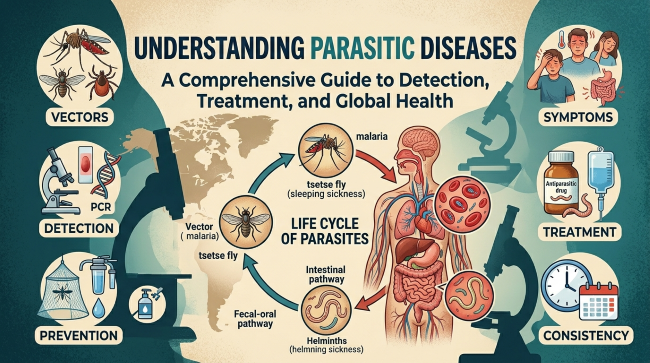
Parasitic diseases are infections caused by parasites living in or on the body. Understanding symptoms, causes, and prevention helps maintain good health.
Overview
Parasitic diseases are caused by organisms called parasites that live on or inside a host, often causing illness. Common parasitic infections include malaria, giardiasis, and toxoplasmosis. Symptoms vary widely depending on the parasite but may include diarrhea, fatigue, abdominal pain, and weight loss. Parasites spread through contaminated food, water, insect bites, or close contact with infected individuals. Diagnosis typically involves laboratory testing of blood, stool, or tissue samples. Treatment depends on the specific parasite and may include antiparasitic medications prescribed by a healthcare professional. Preventive measures such as practicing good hygiene, using insect repellent, drinking clean water, and proper food handling are essential. If you suspect a parasitic infection, consult a qualified healthcare provider for accurate diagnosis and appropriate treatment.
Symptoms
Symptoms of parasitic diseases vary but often include diarrhea, abdominal pain, fatigue, weight loss, nausea, and fever.
Causes
Parasitic diseases are caused by parasites such as protozoa, helminths, and ectoparasites entering the body through contaminated food, water, insect bites, or close contact with infected individuals.
Diagnosis
Diagnosis involves laboratory tests like blood tests, stool analysis, or tissue biopsies to identify the specific parasite causing infection.
Treatment
Treatment usually involves antiparasitic medications prescribed by healthcare providers, tailored to the type of parasite and severity of infection.
Prevention
Prevent parasitic infections by practicing good hygiene, drinking safe water, eating properly cooked food, using insect repellents, and avoiding contact with contaminated sources.
Complications
If untreated, parasitic infections can cause severe complications such as malnutrition, organ damage, anemia, and in some cases, life-threatening conditions.
Diet Plan
A balanced diet rich in vitamins and minerals supports immune health during parasitic infections. Include fruits, vegetables, lean proteins, and plenty of fluids. Avoid raw or undercooked foods that might worsen infection.
Frequently Asked Questions
How do parasitic infections spread?
Parasitic infections spread through contaminated food or water, insect bites, or contact with infected people or animals.
What are common symptoms of parasitic diseases?
Symptoms can include diarrhea, abdominal pain, fatigue, weight loss, and fever, depending on the type of parasite.
Can parasitic infections be prevented?
Yes, prevention includes good hygiene, safe food and water practices, using insect repellents, and avoiding contact with infected sources.
When should I see a doctor for a parasitic infection?
If you experience persistent symptoms like diarrhea, abdominal pain, or unexplained fatigue, especially after travel or exposure risks, consult a healthcare professional.
Medical disclaimer
This content is for educational use only. Speak with a qualified healthcare professional for diagnosis, treatment, or medication decisions.