Testosterone Injection: Patient Information & Frequently Asked Questions
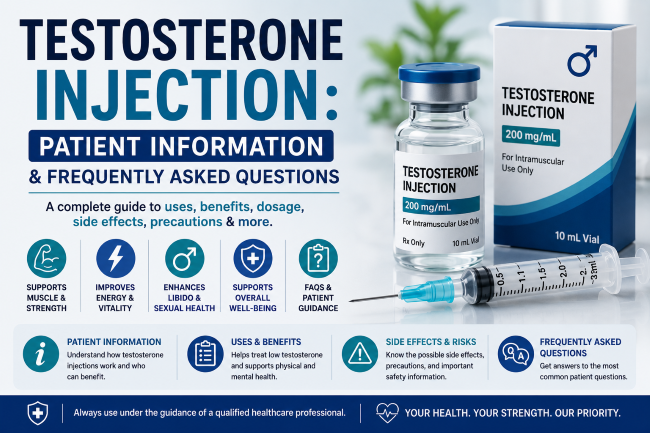
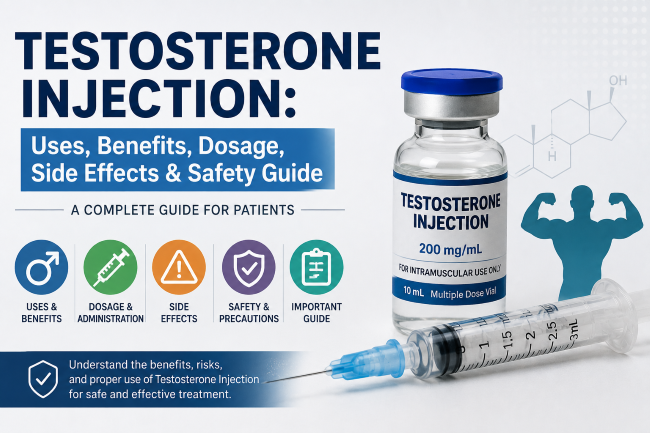
Testosterone injection is a hormone therapy used to treat low testosterone levels in males. Understand its uses, benefits, side effects, and precautions.
Overview
Testosterone injection is a medication used primarily to treat males with low testosterone levels, a condition known as hypogonadism. Testosterone is a natural male hormone responsible for developing male sexual characteristics, muscle mass, bone density, and overall well-being. This injection helps restore normal testosterone levels when the body does not produce enough naturally. The medication is administered by a healthcare professional, usually as an intramuscular injection every 1 to 4 weeks, depending on the prescribed dosage.
Before starting testosterone injection therapy, it is important to discuss your medical history, current medications, and any allergies with your healthcare provider. Regular monitoring through blood tests is necessary to ensure the treatment is effective and to minimize potential side effects.
Common side effects can include injection site pain, mood changes, increased red blood cell count, and acne. Serious side effects are rare but can include heart problems, liver issues, and prostate enlargement. Always report any unusual symptoms to your healthcare provider promptly.
This medication should not be used by individuals with breast or prostate cancer. It may interact with blood thinners, corticosteroids, or insulin, so inform your doctor about all medications you take.
Store testosterone injections as instructed, usually in a cool, dry place away from direct light and out of reach of children.
Consult your healthcare professional before starting or stopping testosterone injections to ensure safe and effective treatment tailored to your needs.
Uses
Testosterone injection is used to treat males with low or absent natural testosterone production, including conditions like hypogonadism and delayed puberty.
Dosage
The dosage varies based on individual needs but is generally administered as an intramuscular injection every 1 to 4 weeks. Your healthcare provider will determine the appropriate dose and schedule.
How It Works
Testosterone injection replenishes low levels of the hormone testosterone in the body, helping to restore normal male characteristics and maintain bodily functions influenced by testosterone.
Benefits
Benefits include improved energy, increased muscle mass, better mood, enhanced libido, and overall improved quality of life in men with low testosterone.
Side Effects
Possible side effects include pain at the injection site, acne, mood swings, increased red blood cell count, and in rare cases, heart or liver problems and prostate enlargement.
Precautions
Inform your doctor if you have prostate or breast cancer, heart disease, liver problems, or sleep apnea. Avoid use if these conditions are present without medical advice.
Interactions
Testosterone injections may interact with blood thinners, corticosteroids, insulin, and other medications. Always inform your healthcare provider about all medicines you take.
Storage
Store testosterone injections at room temperature away from light and moisture. Keep out of reach of children and do not freeze.
Frequently Asked Questions
What is testosterone injection used for?
Testosterone injection is used to treat males with low testosterone levels due to conditions such as hypogonadism.
How is testosterone injection administered?
It is typically given as an intramuscular injection by a healthcare professional every 1 to 4 weeks.
What are common side effects of testosterone injections?
Common side effects include injection site pain, mood changes, acne, and increased red blood cell count.
Can I use testosterone injections if I have prostate cancer?
No, testosterone injections should not be used if you have prostate or breast cancer.
Do I need to monitor anything while on testosterone therapy?
Yes, regular blood tests are necessary to monitor testosterone levels and check for side effects.
Medical disclaimer
This content is for educational use only. Speak with a qualified healthcare professional before starting, stopping, or changing any medication.