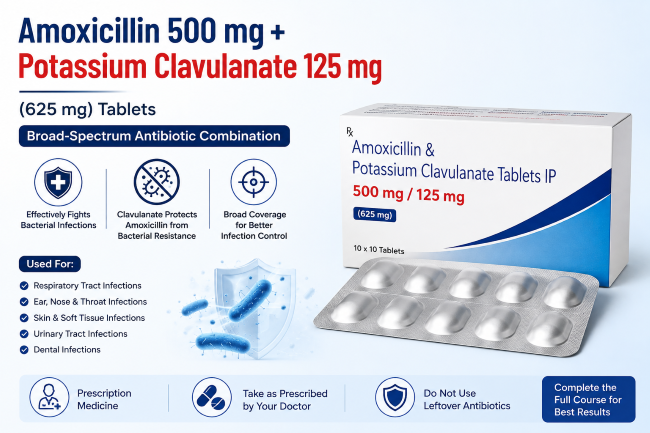
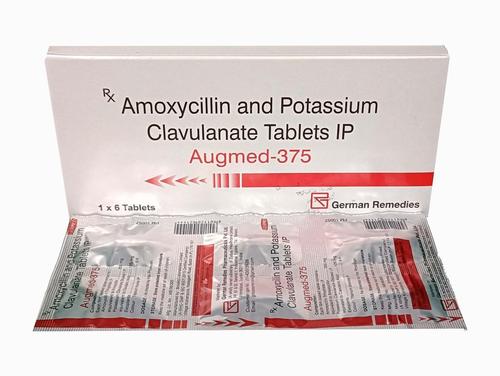
Amoxicillin 500 mg + Potassium Clavulanate 125 mg is an antibiotic used to treat various bacterial infections. This guide covers its uses, dosage, side effects, and safety tips.
Overview
Amoxicillin 500 mg + Potassium Clavulanate 125 mg is a combination antibiotic commonly prescribed to treat bacterial infections such as respiratory tract infections, urinary tract infections, skin infections, and sinusitis. Amoxicillin works by stopping the growth of bacteria, while Potassium Clavulanate helps prevent bacterial resistance by inhibiting beta-lactamase enzymes produced by some bacteria.
Proper dosage and duration depend on the type and severity of infection. It is important to follow the healthcare provider’s instructions and complete the full course to prevent antibiotic resistance.
Common side effects may include nausea, diarrhea, and skin rash. Serious side effects are rare but require immediate medical attention. Patients should inform their healthcare provider about any allergies or existing medical conditions before starting this medication.
This antibiotic may interact with other medicines, so always disclose all current medications to your doctor. Store the medication in a cool, dry place away from direct sunlight and out of reach of children.
Consult a qualified healthcare professional before starting, stopping, or changing the dosage of Amoxicillin + Potassium Clavulanate to ensure safe and effective treatment.
Uses
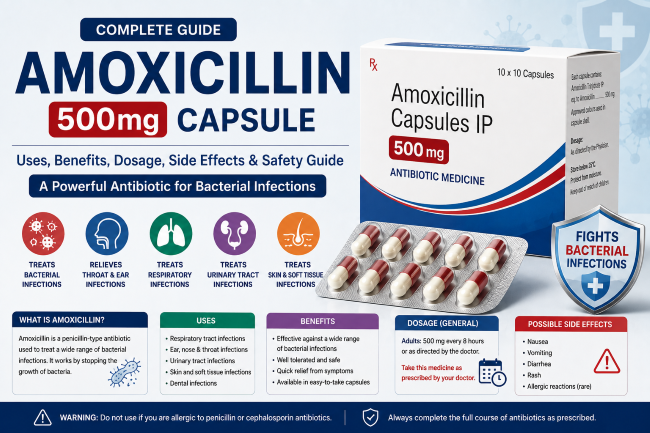
Amoxicillin 500 mg + Potassium Clavulanate 125 mg is used to treat bacterial infections such as sinusitis, pneumonia, ear infections, urinary tract infections, skin infections, and dental infections.
Dosage
Dosage varies based on infection type and severity. Typically, adults take one tablet every 8 to 12 hours. Follow your healthcare provider’s instructions carefully and complete the entire course.
How It Works
Amoxicillin kills bacteria by inhibiting the synthesis of bacterial cell walls. Potassium Clavulanate blocks beta-lactamase enzymes produced by bacteria to resist amoxicillin, enhancing its effectiveness.
Benefits
Effectively treats a wide range of bacterial infections, helps prevent antibiotic resistance, and reduces symptoms and duration of infections when taken as prescribed.
Side Effects
Possible side effects include nausea, vomiting, diarrhea, stomach upset, skin rash, and allergic reactions. Seek medical attention if you experience severe allergic symptoms like swelling, difficulty breathing, or severe rash.
Precautions
Inform your doctor if you have allergies to penicillin or other antibiotics, liver or kidney disease, or if you are pregnant or breastfeeding. Avoid alcohol while taking this medication.
Interactions
May interact with blood thinners, certain other antibiotics, and oral contraceptives. Always inform your healthcare provider about all medications and supplements you use.
Storage
Store at room temperature between 20-25°C (68-77°F), away from moisture and heat. Keep out of reach of children and do not use after the expiration date.
Frequently Asked Questions
What infections does Amoxicillin 500 mg + Potassium Clavulanate 125 mg treat?
It is used to treat various bacterial infections including respiratory tract infections, urinary tract infections, skin infections, and sinusitis.
Can I stop the medication once I feel better?
No, you should complete the full prescribed course to avoid antibiotic resistance and ensure the infection is fully treated.
Are there any common side effects?
Common side effects may include nausea, diarrhea, and skin rash. If you experience severe side effects, contact your healthcare provider immediately.
Is it safe to take this medication with other drugs?
Some drug interactions may occur. Inform your doctor about all medications and supplements you are taking before starting this antibiotic.
Medical disclaimer
This content is for educational use only. Speak with a qualified healthcare professional before starting, stopping, or changing any medication.